Electric Mini Lifting Crane
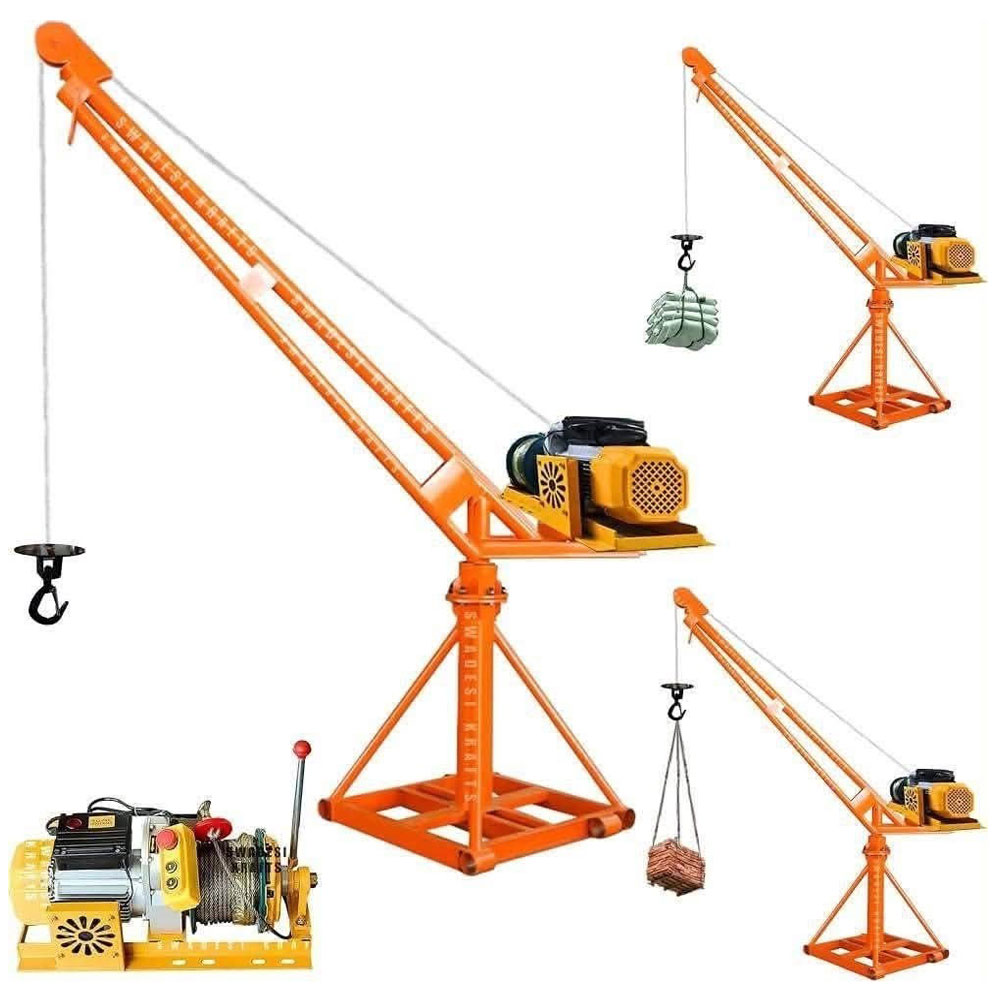
Electric Mini Lifting Crane is a compact and efficient lifting solution designed for construction sites, workshops, warehouses, factories, and material-handling applications. It helps lift and move heavy materials vertically with less manual effort and improved productivity. Depending on the model, electric mini cranes can offer capacities around 500–1,000 kg, with features such as electric motors, wire ropes, wired controllers, emergency stops, and lifting-limit protection.
Key Features
- Heavy-duty electric lifting system
- Compact and portable design
- High lifting capacity
- Strong steel wire rope
- Easy wired/pendant control
- Smooth vertical lifting and lowering
- Emergency stop and safety protection on selected models
- Suitable for construction and industrial material handling
- Available with single- or double-line lifting configurations
Technical Specifications
Specifications vary by model; verify the exact model before publishing.
| Specification |
Typical/Example Specification |
| Product Type |
Electric Mini Lifting Crane |
| Lifting Capacity |
500–1,000 kg |
| Motor Power |
1.2–3.0 kW |
| Power Supply |
220V, 50Hz or model-specific |
| Lifting Height |
Up to 20–30 m |
| Wire Rope |
Approx. 4–8 mm, model dependent |
| Control |
Wired Remote / Pendant |
| Safety |
Emergency Stop, Limit Protection |
| Application |
Construction, Factory, Warehouse, Workshop |
Some commercial models specify 800 kg capacity, 3,000 W motor power, 30 m lifting height, 8 mm wire rope, and a 300 × 300 mm base.
Applications
- Building construction
- Construction material lifting
- Factory and workshop operations
- Warehouse material handling
- Machinery installation
- Roof and structural work
- Loading and unloading operations
Safety Note: Always follow the manufacturer’s rated load, installation requirements, inspection schedule, and operating instructions. Never lift people or allow personnel underneath a suspended load.
Setup and Installation
Proper installation is crucial for safe and efficient operation. Ensure all steps are followed carefully.
- Unpacking: Carefully remove all components from the packaging. Check for any visible damage during transit.
- Mounting Location: Select a sturdy and stable overhead beam or structure capable of supporting the hoist’s weight plus the maximum rated load.
- Secure Mounting: Attach the hoist securely to the chosen support using the provided mounting clamps/brackets. Ensure all bolts are tightened to the manufacturer’s specifications.
- Electrical Connection: Connect the hoist to a dedicated 220V, 50Hz, single-phase power outlet. Ensure the circuit is properly grounded and protected by an appropriate circuit breaker.
- Wire Rope Inspection: Before first use, fully extend and retract the wire rope to check for any kinks, fraying, or damage. Ensure it spools correctly onto the drum.
- Hook Configuration:
- Single Hook Use: For direct lifting, attach the main hook directly to the load. This provides higher lifting speed but lower capacity.
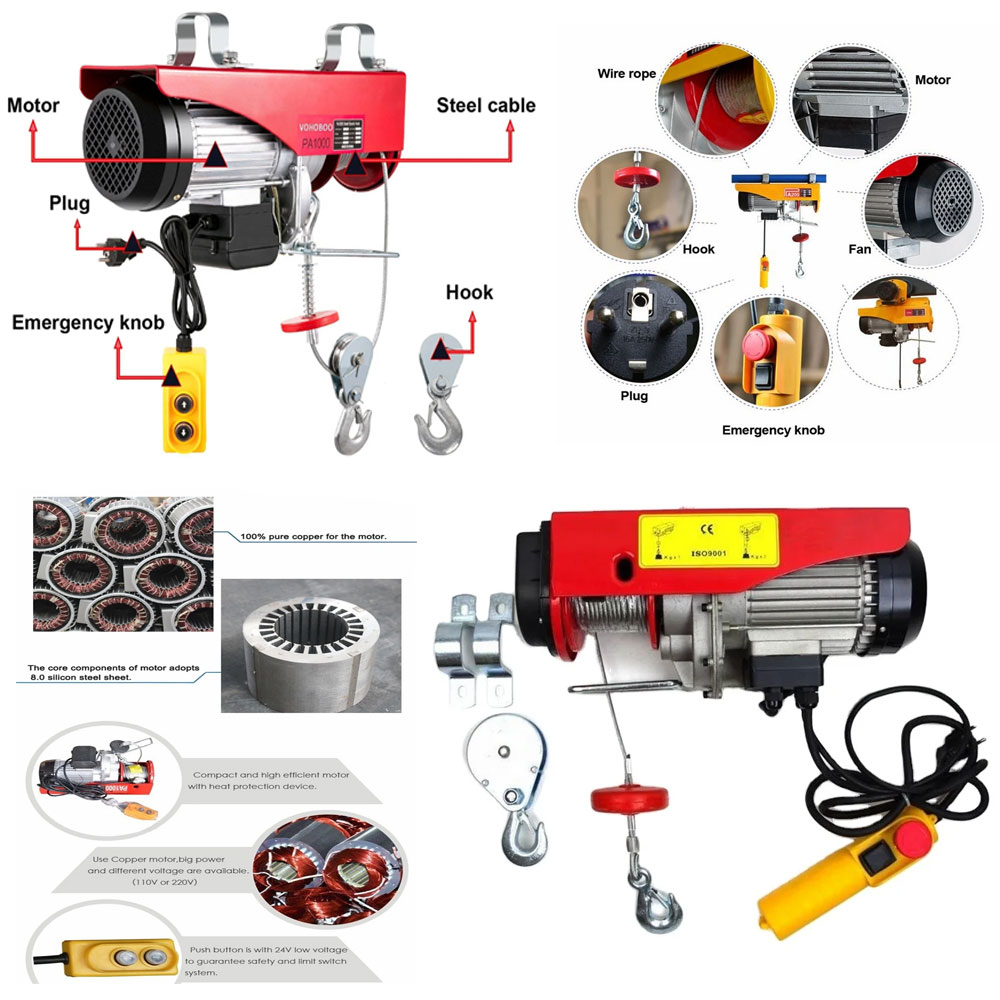
- Double Hook Use (with Pulley Block): For increased lifting capacity (doubled) and reduced lifting speed (halved), use the provided pulley block. Thread the wire rope through the pulley block and attach the secondary hook. Refer to the diagram below.
Safety Information
Always prioritize safety when operating the electric hoist. Failure to follow these instructions may result in serious injury or equipment damage.
- Read and understand this entire manual before installation or operation.
- Do not exceed the rated load capacity of the hoist. Refer to the specifications table for your specific model.
- Ensure the hoist is securely mounted to a stable and appropriate support structure.
- Regularly inspect the wire rope, hooks, and all components for wear, damage, or deformation. Replace damaged parts immediately.
- Keep hands and body clear of the wire rope and moving parts during operation.
- Do not use the hoist to lift people or loads over people.
- Ensure the power supply matches the hoist’s requirements (220V 50Hz single-phase).
- Familiarize yourself with the emergency stop function on the control pendant.
- The hoist is equipped with a thermal protection device; if it overheats, it will shut down. Allow it to cool before resuming operation.
- The control button features 24V low voltage for enhanced safety.
- Protection class is IP54, indicating protection against dust and splashing water. However, avoid direct exposure to heavy rain or submersion.\
- Limit Switch Check: Manually test the upper and lower limit switches to ensure they stop the hoist automatically before the hook reaches its extreme positions. Adjust if necessary.
Operating Instructions
Follow these steps for safe and effective operation of your electric hoist.
- Pre-Operation Check: Before each use, visually inspect the hoist, wire rope, hooks, and control pendant for any signs of damage, wear, or loose connections.
- Secure the Load: Attach the load securely to the hook(s). Ensure the load is balanced and will not shift during lifting. Never exceed the rated capacity for your chosen hook configuration (single or double).
- Clear the Area: Ensure the lifting path is clear of obstructions and personnel.
- Lifting:
- Press and hold the “UP” button on the control pendant to lift the load.
- Lift the load slowly and smoothly, avoiding sudden jerks.
- The hoist will automatically stop when the upper limit switch is activated.
- Lowering:
- Press and hold the “DOWN” button on the control pendant to lower the load.
- Lower the load slowly and smoothly.
- The hoist will automatically stop when the lower limit switch is activated.
- Emergency Stop: In case of an emergency or malfunction, immediately press the red “EMERGENCY STOP” knob on the control pendant. This will cut power to the hoist.
- After Operation: Once the task is complete, lower the hook to a safe resting position and disconnect power if the hoist will not be used for an extended period.
Maintenance
Regular maintenance ensures the longevity and safe operation of your hoist.
- Daily/Before Use:
- Inspect the wire rope for any signs of wear, fraying, kinks, or corrosion.
- Check hooks for deformation, cracks, or worn safety latches.
- Verify that the emergency stop button and limit switches are functioning correctly.
- Ensure all mounting bolts are tight.
- Monthly/Regularly:
- Clean the hoist exterior, especially the motor cooling fins, to prevent overheating.
- Check electrical connections for tightness and signs of corrosion.
- Lubricate the wire rope and other moving parts as recommended by general hoist maintenance practices (e.g., light oil or grease).
- Inspect the motor and gearbox for unusual noises or excessive heat during operation.
- Storage: When not in use, store the hoist in a dry, clean, and protected environment to prevent rust and damage.
Troubleshooting
This section provides solutions to common issues you might encounter.
| Problem |
Possible Cause |
Solution |
| Hoist does not operate when buttons are pressed. |
- No power supply.
- Emergency stop button engaged.
- Thermal overload protection activated.
- Limit switch activated.
- Loose electrical connection.
|
- Check power outlet and circuit breaker.
- Rotate and pull out the emergency stop button.
- Allow motor to cool down (approx. 15-30 minutes). Reduce load if overloaded.
- Ensure hook is not at its upper or lower limit.
- Check all power and control cable connections.
|
| Hoist operates slowly or with difficulty. |
- Overload.
- Motor issues.
- Wire rope damage.
|
- Reduce the load to within rated capacity.
- Contact qualified service personnel.
- Inspect and replace damaged wire rope.
|
| Unusual noises during operation. |
- Lack of lubrication.
- Worn gears or bearings.
- Loose components.
|
- Lubricate moving parts.
- Contact qualified service personnel.
- Inspect and tighten any loose parts.
|
User Tips
- Always perform a quick visual inspection before each use to catch potential issues early.
- When using the double hook configuration, remember that the lifting speed will be halved, but the capacity doubled. Plan your lifts accordingly.
- Avoid leaving the hoist under load for extended periods when not actively lifting or lowering.
- Keep the control pendant clean and dry.
- If you notice any unusual behavior, stop operation immediately and investigate the cause.


Reviews
There are no reviews yet.